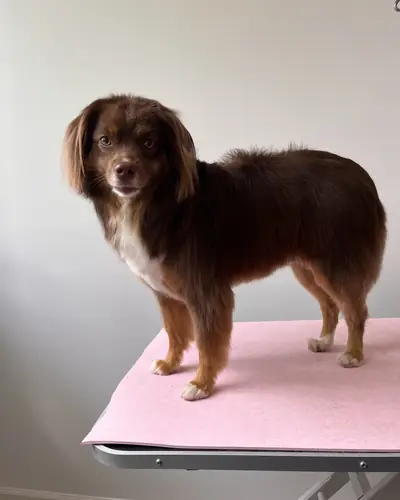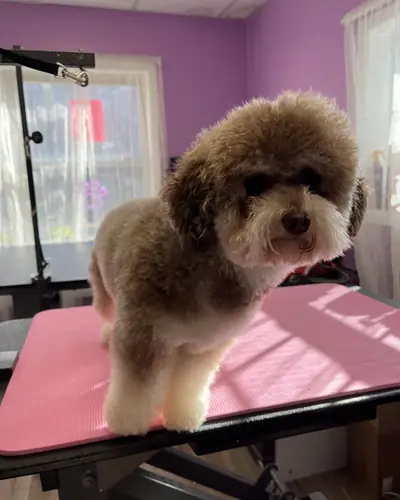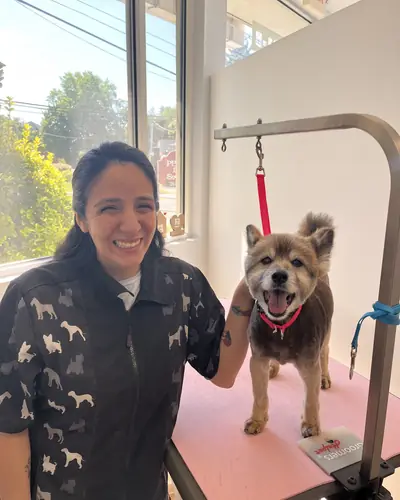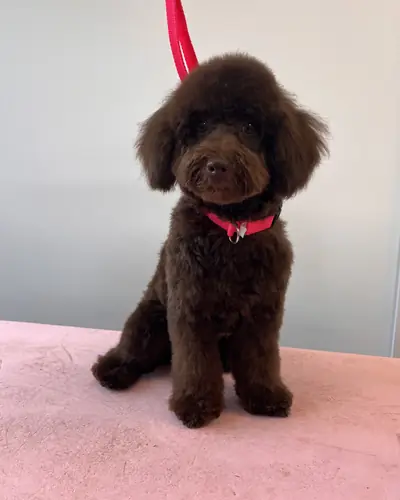
Think of that range as a starting point, not a rule. The American Kennel Club (AKC) notes that how often a dog needs grooming depends on a mix of breed, coat length and type, time spent outside getting dirty, and climate. Below, we break it down by coat type so you can find the rhythm that keeps your dog comfortable.
How often should a dog be professionally groomed?
Our general guidance at Prideful Grooming is that dogs come in, on average, every 4–6 weeks. Where your dog lands in that window depends on breed, coat, how much time they spend outdoors and how much brushing happens at home.
Some dogs need a groomer less often. The AKC points out that whether you visit a professional every six weeks or three times a year, it's best to do a little extra grooming at home too. In other words, the schedule should fit the coat, not the calendar.
A simple way to think about it:
- Coats that keep growing (the kind that needs regular haircuts): usually the shorter end of the range.
- Double coats: regular baths, blow-outs and brush-outs, especially around heavy shedding, plus weekly brushing at home.
- Short, smooth coats: often fine with longer gaps between full grooms, as long as nails, teeth and skin are looked after.
How often should a dog with a hair coat be groomed?
Some dogs have hair that keeps growing, while others have fur that grows to a set length and stops. According to the AKC, coats made of hair can keep growing for a very long time, sometimes years, and trimming a hair coat often is recommended to keep its length manageable.
These dogs, often the curly and teddy-trimmed pups, tend to benefit most from a steady 4–6 week schedule. Wait much longer and the coat can get long enough to tangle. For long coats that are prone to matting, the ASPCA suggests setting up a daily grooming routine at home.
If you love a particular look, regular visits also make it easier to keep that shape consistent instead of starting over every time.
How often should a double-coated dog be groomed?
Double-coated dogs have a soft undercoat beneath a coarser outer coat. They usually don't need haircuts the way hair-coated dogs do, but they shed, and that loose undercoat has to go somewhere.
The AKC recommends brushing a double-coated dog with a slicker brush and following up with a comb at least once a week. It also notes that a dog in a colder place may shed the undercoat mainly in spring and fall, while dogs in warmer places could shed more often or all the time.
Shaving usually isn't the goal for these coats. The AKC advises against shaving a double coat unless tangles and build-up are so thick that the skin can't dry, because shaving can damage both the topcoat and the insulating undercoat. A professional bath, blow-dry and thorough brush-out, especially as shedding season starts, is often the better approach.
How often should a short-coated dog be groomed?
Short, smooth coats are the easiest to keep up with at home. The ASPCA says dogs with smooth, short coats only need brushing about once a week. It recommends bathing your dog at least once every three months, and more often for dogs who spend a lot of time outdoors or have skin problems.
Short-coated dogs may never need a haircut, but they still need their nails and teeth looked after. The AKC notes that if you can hear your dog's nails clicking on the floor, they're likely too long. A regular visit for a bath and pawdicure can help keep them comfortable between vet checkups.
What does a full groom include, and why does timing matter?
At our salons, a full groom includes a full bath, blow drying, a haircut, a pawdicure (nail trim) and teeth cleaning. Keeping those visits regular means nails stay short, the coat stays manageable and your dog gets used to the routine.
A quick note on teeth: grooming-level teeth cleaning helps freshen your dog's mouth, but it does not replace a professional dental exam and cleaning from your veterinarian. VCA Animal Hospitals explains that there is no way to remove tartar below the gumline or between the teeth without anesthesia, and major veterinary organizations agree dental cleanings should be performed under anesthesia.
Regular grooms also give you an extra set of eyes on your dog. The AKC notes that handling during grooming allows early detection of lumps, bumps and skin irritations. Anything unusual is worth mentioning to your vet.
How can you stretch the time between grooms?
Home care is the biggest factor you control. According to the AKC, most dogs only need a few brushing sessions a week, though long-coated breeds often do best with daily brushing.
- Brush on a schedule that matches the coat, working all the way down to the skin.
- Check paws, ears and the coat behind the legs for tangles after walks and play.
- Call your groomer early if you notice mats forming, rather than waiting for the next appointment.
Not sure where your dog fits? Our groomers in East Rutherford and Rochelle Park can help you settle on a schedule. Take a look at our grooming services or book your dog's next groom online.
Sources
- Why It's Worth Having Your Dog Groomed Professionally, American Kennel Club
- Does My Dog Have Hair or Fur?, American Kennel Club
- How Should You Groom a Double-Coated Dog?, American Kennel Club
- Dog Grooming Tips, ASPCA
- How to Groom Your Dog at Home: Easy Tips for Everyday Care, American Kennel Club
- Risks of Anesthesia-Free Dental Procedures, VCA Animal Hospitals
This article is general information, not veterinary advice. If your pet has a health concern, talk to your veterinarian.